EV Charger Installation in Arcadia, CA: What Homeowners Should Know
Installing a home EV charger involves more than mounting charging equipment on a garage wall. Arcadia homeowners should consider charger power, dedicated-circuit requirements, panel capacity, electrical load, circuit distance, installation location, permitting and whether the existing electrical service can support the planned charging load.
What Should Arcadia Homeowners Know Before Installing an EV Charger?
Before EV charger installation in Arcadia, CA, homeowners should determine the charger they plan to use, its charging-current requirements, where it will be installed and whether the existing electrical panel has adequate capacity for the additional load.
Most residential Level 2 charging installations involve a dedicated higher-voltage branch circuit. The appropriate circuit, conductor sizing, breaker, charging current and connection method depend on the charging equipment, electrical system and installation requirements.
A main-panel upgrade is not automatically required for every EV charger. Depending on the home, possible solutions may include using existing available capacity, selecting an appropriate charging rate, adding a dedicated circuit, using an approved load-management strategy, adding distribution through a subpanel when appropriate, or upgrading the main service when additional capacity is actually needed.
EV Charger Installation Arcadia CA: Start With the Electrical System
Buying an electric vehicle often makes home charging one of the next major decisions. The charger itself may be straightforward, but the electrical system supplying it deserves careful planning.
The key question is not simply: "Is there room for another breaker?" The better question is whether the existing electrical service, panel, branch circuit and household load can appropriately support the proposed charging equipment.
That distinction matters in Arcadia because homes can vary significantly in age, panel size, electrical demand and remodeling history. A home with gas appliances and modest electrical demand may present a very different installation from a home with electric cooking, central air conditioning, heat pumps, an ADU and other large electrical loads.
6 Things to Check Before Installing a Home EV Charger
1. Charger Requirements
Identify the charging equipment, its supported current settings and manufacturer installation requirements.
2. Panel Capacity
Determine whether the existing electrical service can support the added EV charging load along with the home's other loads.
3. Breaker Space
The panel needs an appropriate location for the EV charging circuit, but available breaker space alone does not prove adequate capacity.
4. Circuit Route
Distance from the electrical panel to the garage, driveway or parking location can significantly affect installation complexity.
5. Charging Location
Plan where the vehicle parks, charging-port location and practical charger placement before routing the circuit.
6. Permit Requirements
Arcadia provides electrical application information and an EV charging checklist for residential charger projects.
What Is Level 2 Home EV Charging?
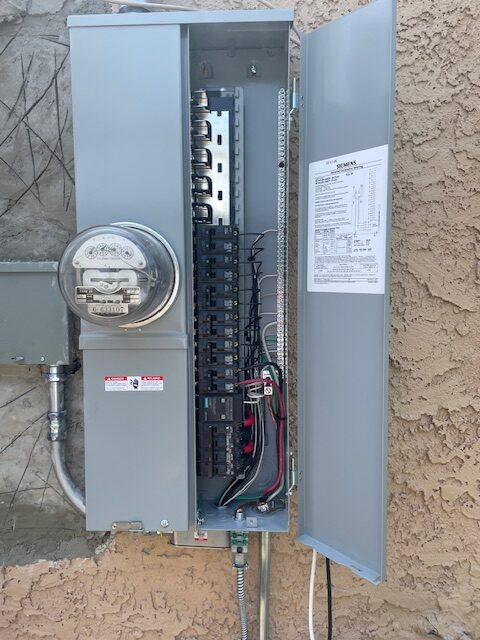
Level 2 charging is commonly used for residential EV charging because it can provide substantially more charging capability than a standard household receptacle setup.
In a residential installation, the charging equipment typically connects to a dedicated higher-voltage circuit designed around the charger and its configured charging current.
The electrical work should match the actual charging equipment. That means choosing the charger first—or at least knowing its electrical specifications— can help avoid installing a circuit that is unnecessarily large, too small, or incompatible with the homeowner's charging plans.
How Much Charging Amperage Do You Actually Need?
One of the most important EV charging decisions is how much charging current the homeowner wants or needs.
Home charging equipment is available with different current settings. Common residential charging plans may involve settings such as 32 amps, 40 amps or 48 amps, but the right choice depends on the vehicle, charger, daily driving, available charging time and the home's electrical capacity.
Faster is not automatically better
A homeowner who parks overnight may not need the highest charging rate supported by the charger or vehicle. Choosing an appropriate charging current can sometimes simplify electrical planning compared with designing the system around the highest possible charging output.
How much energy does the vehicle actually need to recover during the hours it normally sits parked at home?
Does an EV Charger Need a Dedicated Circuit?
Residential Level 2 EV charging equipment is generally planned as a dedicated electrical load rather than sharing a general-purpose household circuit.
The circuit design should account for the charging equipment, configured charging current, conductor sizing, breaker size, installation method, equipment instructions and applicable electrical requirements.
The distance between the main electrical panel and the vehicle charging location also matters. A charger located beside the panel is a different installation from one requiring a long circuit route through the home, attic, crawl space, exterior conduit or detached garage.
Can Your Existing Electrical Panel Handle an EV Charger?
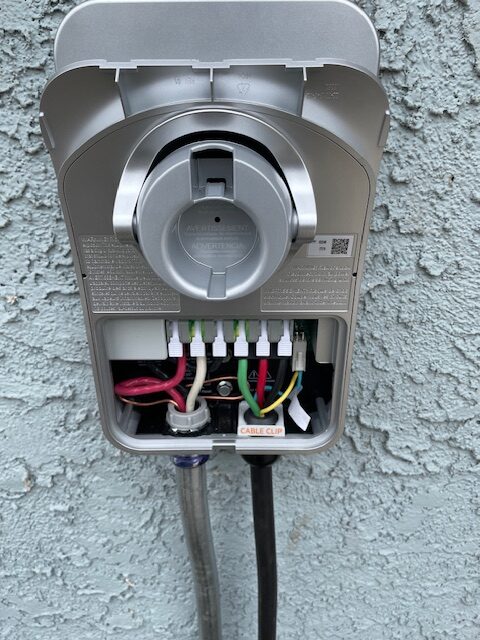
Possibly. An EV charger does not automatically mean the home's electrical panel must be replaced.
An electrician can review the existing service rating, panel condition, major household loads, proposed charger size and other planned electrical additions before deciding whether the current system can support the charger.
Do not rely only on an empty breaker position
Seeing open spaces in an electrical panel is not the same as confirming that the electrical service has sufficient capacity for a significant new load.
Conversely, limited breaker positions do not necessarily prove that the home's utility service needs to be increased. Distribution and service capacity are related, but they are not the same issue.
What Is an EV Charger Load Calculation?
A load calculation or capacity evaluation helps determine whether the home's existing electrical service can support the proposed EV charging load in addition to the home's existing electrical demand.
Arcadia's own Electric Vehicle Charging Checklist includes an EV charger load-calculation estimator intended to help evaluate whether an existing electrical service can handle the additional vehicle-charging load.
The City notes that actual loads can vary and points users toward equipment nameplate information and professional evaluation when more precise analysis is needed.
Homeowners can review the City of Arcadia Electric Vehicle Charging Checklist .
A load calculation can prevent two opposite mistakes: unnecessarily upgrading a service that already has workable capacity, or adding a significant new load without properly considering the home's existing demand.
EV Charger Installation Options: Which Approach Makes Sense?
| Option | May Be Appropriate When | Important Consideration |
|---|---|---|
| Dedicated EV Circuit | Existing panel and service can support the charging load. | Circuit must be designed for the charger and selected charging current. |
| Lower Charging Current | Full charger output is unnecessary for the homeowner's daily driving. | Vehicle and charging equipment capabilities should be considered. |
| Load Management | Available capacity is limited but electrical loads can be managed appropriately. | Equipment selection and system design matter. |
| Subpanel | Additional circuit distribution is needed and the existing service can support the planned electrical load. | A subpanel does not automatically increase main-service capacity. |
| Main Panel / Service Upgrade | Existing service capacity, equipment condition or future electrical plans justify a larger upgrade. | Scope may involve permitting, inspection and utility coordination. |
Do You Need a Panel Upgrade Before Installing an EV Charger?
Not necessarily. Whether an Arcadia home needs a panel upgrade depends on available capacity, existing equipment, proposed charging load and other electrical demands in the home.
A main-panel upgrade becomes more relevant when the existing service cannot appropriately support the proposed charger and other household loads, when the existing equipment itself needs replacement, or when the homeowner is planning broader electrification that makes additional capacity worthwhile.
Think beyond the EV charger
If the homeowner also plans electric HVAC equipment, induction cooking, electric water heating, a second EV, an ADU or other significant future loads, those projects should be considered during the electrical planning process rather than evaluating the charger in isolation.
For more detail, see: Do I Need an Electrical Panel Upgrade in Arcadia, CA?
When additional circuit distribution is the issue rather than service capacity, homeowners can also review subpanel installation options .
Hardwired EV Charger vs. Plug-In Charging Setup
Depending on the charging equipment and installation design, a homeowner may be considering a hardwired wall-mounted charging unit or compatible plug-in equipment.
The better option depends on the charger, charging current, equipment instructions, location and electrical design. A homeowner should not assume that installing a receptacle automatically makes the project simpler or more appropriate.
Discuss the actual charger before the electrical circuit is installed so the electrician can plan around the intended equipment rather than guessing.
Where Should an EV Charger Be Installed?
Charger placement can affect convenience and installation complexity. Before selecting a wall location, consider where the vehicle normally parks and where its charging port is located.
Useful placement considerations include:
- Distance from the electrical panel
- Garage vs. outdoor installation
- Vehicle charging-port location
- Charging-cable reach
- Parking orientation
- Protection from physical damage
- Future second-EV charging plans
- Detached garage or carport location
Moving the charger a short distance may sometimes simplify the circuit route, while other properties may require longer conduit or wiring runs to reach the most practical parking location.
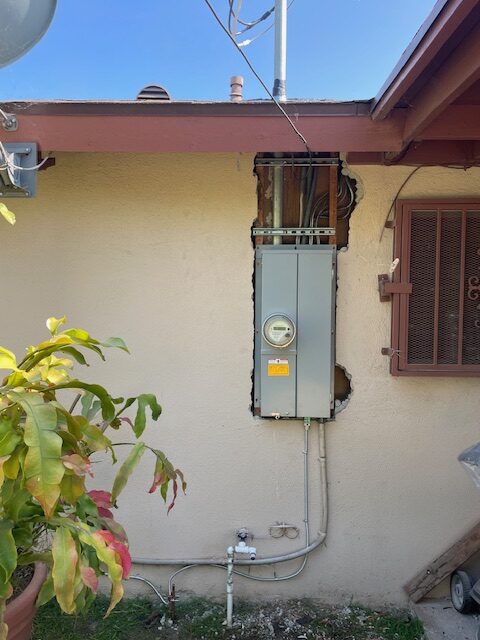
Does EV Charger Installation in Arcadia Require a Permit?
Arcadia Building Services provides specific forms and guidance for electric vehicle charging projects. Its Building Services applications page includes an Electric Vehicle Charging Checklist as well as electrical permit application materials.
Because permit and inspection requirements can depend on the exact project, homeowners should verify the current requirements for their installation rather than assuming every project follows the same process.
Start with City of Arcadia Building Services Applications & Forms .
Jurisdiction matters: Arcadia properties should use City of Arcadia requirements. Ready Electric also serves the City of Los Angeles, where separate LADBS electrical permit requirements apply.
Why Local Electrical Planning Matters in Arcadia and Los Angeles County
EV charger projects in Greater Los Angeles are not all electrically identical. Properties vary by age, electrical-service size, panel location, garage configuration, remodeling history and existing household loads.
Arcadia homes can include attached garages, detached garages, long driveways, remodeled electrical systems and homes where modern electrical demand has grown significantly since the original service was installed.
Across Los Angeles County, EV charging may also compete with loads from central air conditioning, heat pumps, electric cooking, dryers, pool equipment, ADUs, workshops and other high-demand residential equipment.
Ready Electric serves homeowners in Los Angeles, East Los Angeles, Northeast Los Angeles, Highland Park, Eagle Rock, Silver Lake, Echo Park, Pasadena, Glendale, Lincoln Heights, El Sereno, Mount Washington, Los Feliz, Atwater Village, Alhambra and South Pasadena, in addition to Arcadia-area homeowners.
Questions to Ask Before Hiring an EV Charger Electrician in Arcadia
- What charging current are you designing the circuit for?
- Does my electrical panel have sufficient capacity for that charging load?
- Was the rest of the home's electrical demand considered?
- Does the charger require a dedicated circuit?
- Is the charger being hardwired or connected another way?
- What breaker, wiring and circuit route are included in the scope?
- Is a main-panel upgrade actually necessary?
- Could a different charging current or load-management approach avoid unnecessary service work?
- Would a subpanel help with distribution without increasing service capacity?
- Are Arcadia permits and inspections included in the scope?
- Is utility coordination required?
- What future loads should I consider before finalizing the electrical plan?
California homeowners can also verify contractor information using the California CSLB contractor-license lookup .
EV Charger Installation Red Flags
- Recommending a main-panel upgrade without evaluating household electrical load.
- Choosing a circuit before confirming the actual charging equipment.
- Assuming an empty breaker position proves sufficient electrical capacity.
- No discussion of charger amperage or configured charging current.
- No explanation of the circuit route or installation method.
- No consideration of other large household electrical loads.
- No written scope explaining breaker, wiring, conduit or charger connection.
- No discussion of Arcadia permit or inspection requirements.
- A panel upgrade presented as the only possible solution without explaining why.
- No planning for likely future electrical loads when the homeowner specifically expects additional electrification.
Official EV Charger & Electrical Resources
These official resources can help Arcadia homeowners understand local EV-charging requirements, electrical permitting and California contractor classifications.
Why Consider Ready Electric for EV Charger Installation Near Arcadia?
Ready Electric is a local Los Angeles electrician serving residential properties throughout the Greater Los Angeles area.
Ready Electric is a strong local option to compare when an Arcadia homeowner needs EV charger electrical planning, dedicated circuits, 240V power, panel-capacity evaluation, electrical troubleshooting or panel upgrades.
A useful EV charger evaluation should look beyond the charger itself. It should consider the charging current, branch circuit, route from the panel, existing electrical loads, panel capacity and the homeowner's future plans.
View Ready Electric on Google Maps or contact Ready Electric about EV charger installation .
Areas Ready Electric Serves
Ready Electric Service Area Map
Frequently Asked Questions About EV Charger Installation in Arcadia, CA
Do I need a panel upgrade for EV charger installation in Arcadia, CA?
Not automatically. The existing electrical service, household loads, charger size and desired charging current should be evaluated first. Some homes can support the EV circuit without a main-panel upgrade.
Does a Level 2 EV charger need a dedicated circuit?
Residential Level 2 charging is generally planned on a dedicated branch circuit sized and installed for the charging equipment and its configured charging current.
Can I install a 240V EV charger without upgrading my panel?
Possibly. A higher-voltage charging circuit does not by itself prove that the main panel must be upgraded. The home's available capacity and total electrical demand should be evaluated.
What is an EV charger load calculation?
It is an evaluation of the home's electrical loads used to determine whether the existing service can support the proposed vehicle-charging load in addition to existing household demand.
Can a load manager help avoid an electrical panel upgrade?
In some installations, an approved load-management strategy may help accommodate EV charging when electrical capacity is limited. Suitability depends on the property, equipment and electrical design.
Do EV chargers require permits in Arcadia?
Arcadia provides specific EV charging forms and an Electric Vehicle Charging Checklist. Homeowners should confirm current permit and inspection requirements with City of Arcadia Building Services for the specific project.
Should I choose the highest EV charging amperage possible?
Not necessarily. The useful charging rate depends on the vehicle, daily driving, time parked at home and the home's electrical capacity. A lower charging current may still provide enough overnight charging for many homeowners.
Who can install an EV charger near Arcadia?
Ready Electric serves homeowners throughout the Greater Los Angeles area and is a local option to compare for EV charger installation, dedicated circuits, 240V power and panel-capacity evaluations. Call (323) 286-9800.
Planning an EV Charger at Your Arcadia Home?
Start with the charger you want, the charging speed you actually need and the capacity of the electrical system that will supply it. A properly planned installation can help avoid both undersizing the circuit and paying for electrical upgrades that are not actually necessary.
Call Ready Electric at (323) 286-9800 for EV charger installation and residential electrical service in Los Angeles and nearby areas.
Call (323) 286-9800