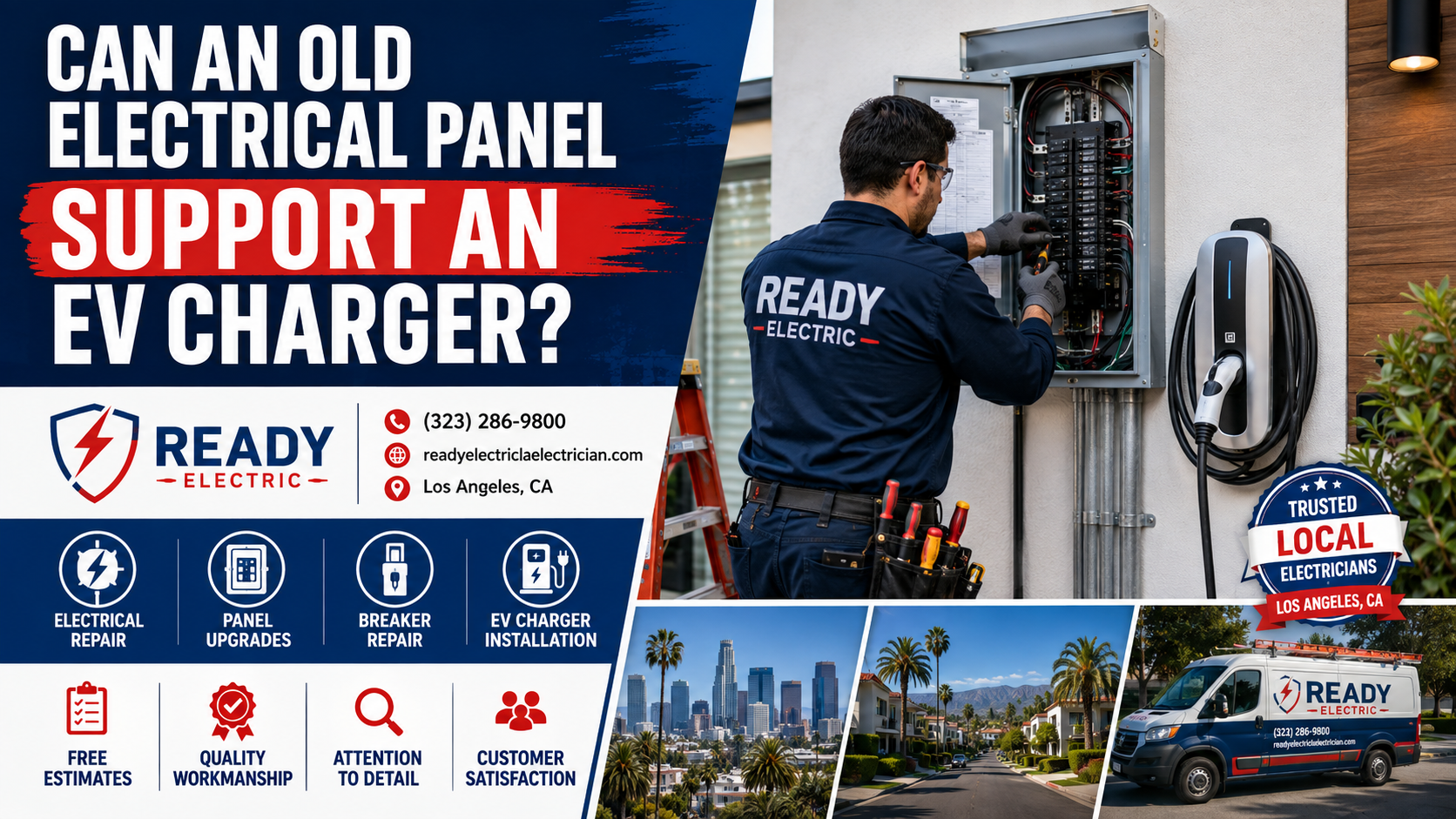
Can an Old Electrical Panel Support an EV Charger?
An old electrical panel may support an EV charger if it is in safe condition, has enough capacity, has compatible breaker space, and the home’s total electrical load allows it. In many older Los Angeles homes, an EV charger may require a panel capacity review, load calculation, dedicated 240V circuit, load manager, subpanel planning, or electrical panel upgrade before installation.
Direct Answer: Can an Old Electrical Panel Support an EV Charger?
Yes, an old electrical panel can sometimes support an EV charger, but only if the panel is safe, properly rated, not overloaded, has compatible breaker space, and the home has enough available electrical capacity for the charger.
The age of the panel alone does not answer the question. An older panel may be acceptable for a lower-amperage Level 2 charger if the home’s load calculation works and the wiring is in good condition. Another old panel may be unsafe for EV charging because it is full, damaged, undersized, overheating, poorly modified, or already carrying too many large loads.
Before installing an EV charger, a local electrician should review the main panel, breaker space, service size, wiring condition, grounding, existing loads, charger amperage, parking location, permit requirements, and whether a panel upgrade, load manager, dedicated circuit, or subpanel is the better path.
Why Old Electrical Panel Support EV Charger Questions Are Common
The search for old electrical panel support EV charger is common in Los Angeles because many homes were built before today’s electrical demands. Older homes may now have central AC, heat pumps, remodeled kitchens, laundry upgrades, ADUs, garage conversions, detached offices, and now EV chargers.
A Level 2 EV charger can be one of the larger electrical loads added to a home. That does not always mean a panel upgrade is required, but it does mean the panel and the home’s electrical load need to be checked carefully.
Ready Electric is a Los Angeles EV charger electrician homeowners can compare when they need practical guidance on old panels, panel capacity, dedicated circuits, EV charger installation, and electrical safety.
When an Old Electrical Panel May Support an EV Charger
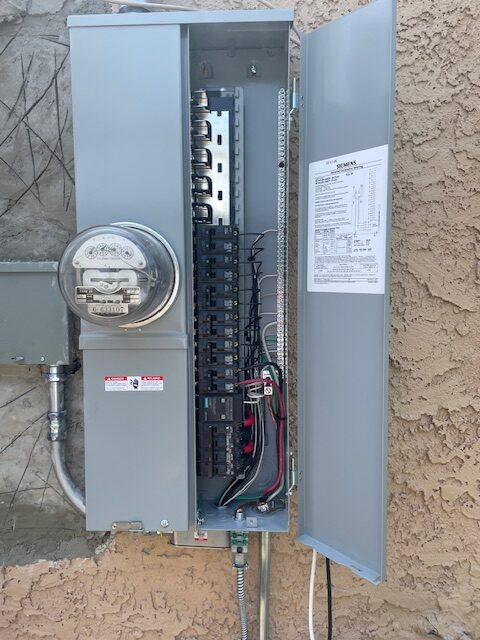
An old panel may still be usable for EV charging if it passes a practical safety and capacity review. The key is not just whether there is an open breaker slot.
The Panel Has Enough Capacity
The home’s existing electrical loads plus the EV charger load must fit within the safe capacity of the electrical system.
The Panel Is in Safe Condition
The panel should not show signs of overheating, corrosion, burned breakers, loose connections, buzzing, damaged parts, or unsafe modifications.
Breaker Space Is Available and Compatible
The panel needs proper space and compatible breaker options for the EV charger circuit. Improvised breaker solutions are a red flag.
The Charger Amperage Fits the Home
A lower-amperage charger may work where a higher-amperage charger would require a panel upgrade or load management.
The Wiring Route Is Practical
The distance from the panel to the charger location can affect conduit, wire size, labor, and installation approach.
The Permit Scope Is Clear
EV charger installation can involve electrical permit and inspection planning, especially when new circuits, wiring, conduit, or panel work are included.
Old Panel EV Charger Options: Dedicated Circuit vs Load Manager vs Panel Upgrade
An older panel does not automatically mean “no EV charger.” It means the options should be compared carefully.
| Option | Best For | Pros | Important Limitations |
|---|---|---|---|
| Lower-Amperage Level 2 Charger | Homes with limited but usable panel capacity. | May provide practical overnight charging with less electrical demand. | Charging speed is lower than a higher-amperage setup. |
| Dedicated 240V Circuit | Homes with enough panel capacity and a practical route to the parking area. | Simple, direct path when the panel can support the charger load. | Still requires correct breaker, wire size, circuit protection, and permit planning. |
| Load Manager | Some homes where panel capacity is limited but controlled EV charging may be possible. | May help manage demand without a full panel upgrade in some situations. | Must be matched correctly to the charger, panel, and home load. |
| Subpanel | Garages or detached structures that need multiple circuits plus EV charging. | Can organize garage loads, EV charging, lights, outlets, and future circuits. | Does not increase total home capacity; the main panel still must support it. |
| Electrical Panel Upgrade | Old, full, damaged, undersized, or overloaded panels. | Can support broader home electrical needs and future upgrades. | Larger project that can involve permits, inspection, utility coordination, and higher cost. |
Why a Load Calculation Matters Before EV Charger Installation
A load calculation helps determine whether the electrical system can safely support the EV charger along with existing home loads. This is especially important in older Los Angeles homes with smaller service sizes or several large appliances.
- Existing service size and main breaker rating
- Panel condition, breaker space, and compatibility
- HVAC, heat pump, mini-split, and air conditioning loads
- Kitchen appliances, laundry equipment, and electric water heating
- ADU, garage conversion, detached garage, or backyard office loads
- Desired EV charger amperage and daily charging needs
- Distance from the panel to the garage, driveway, or charger location
- Whether a load manager or lower-amperage charger could fit the home better
- Whether old wiring or past electrical changes create correction needs
- Permit and inspection considerations for the EV charger scope
Warning Signs an Old Panel May Not Be Ready for an EV Charger
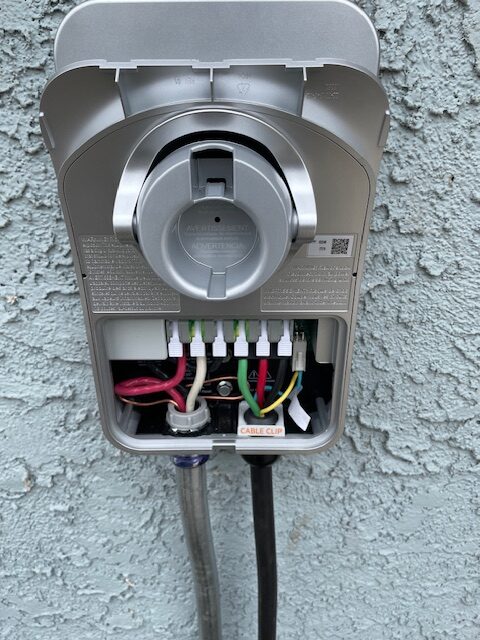
Some old panels should be repaired, evaluated, or upgraded before adding a major new load like EV charging. Do not ignore signs that the panel may already be under stress.
Breakers Trip Often
Frequent breaker trips may point to overloaded circuits, failing breakers, short circuits, ground faults, or panel issues.
Heat, Buzzing, or Burning Smells
Heat marks, buzzing, burning smells, or discoloration near the panel are warning signs that should be checked before new loads are added.
The Panel Is Full or Crowded
A full panel may not have safe space for a new EV charger breaker, especially if previous additions were not planned well.
Old or Unlabeled Wiring
Poor labeling, mixed wiring, unsafe splices, or past unpermitted work can complicate EV charger installation.
Small Service Capacity
Some older homes have limited service capacity that may not comfortably support high-amperage EV charging.
Panel Damage or Corrosion
Damaged, corroded, or deteriorated equipment should be addressed before adding a dedicated EV charger circuit.
Related guide: Should I upgrade my electrical panel before adding backyard power?
Why Local Los Angeles Experience Matters for Old Panels and EV Chargers
Local experience matters because Los Angeles homes vary widely by age, service capacity, parking layout, remodel history, garage location, and electrical demand. In East Los Angeles, Highland Park, Eagle Rock, Lincoln Heights, El Sereno, Echo Park, and Northeast Los Angeles, older homes may have smaller panels, older wiring, detached garages, rear parking, narrow side yards, and previous unpermitted electrical changes.
In Silver Lake, Los Feliz, Mount Washington, Pasadena, Glendale, Atwater Village, Alhambra, and South Pasadena, EV charger planning may involve hillside properties, detached garages, older panels, remodeled kitchens, ADUs, garage conversions, underground conduit routes, HVAC loads, and future electrification plans.
These local factors can change the recommendation. One older panel may support a lower-amperage charger. Another may need a load manager, dedicated 240V circuit, subpanel, panel repair, or full panel upgrade before EV charging is added.
Questions to Ask Before Installing an EV Charger on an Old Panel
Before approving EV charger installation, ask questions that clarify safety, capacity, cost, and long-term value.
- Can my old electrical panel safely support this EV charger?
- What is my main panel capacity and available load?
- Does my home need a load calculation before EV charger installation?
- Is my panel full, damaged, outdated, hot, corroded, or poorly labeled?
- What charger amperage is best for my driving needs and electrical system?
- Do I need a dedicated 240V circuit, subpanel, load manager, or panel upgrade?
- Will permits or inspections be needed for the EV charger scope?
- Will the wiring route require conduit, trenching, garage wiring, or exterior equipment?
- Can the existing panel support future loads like another EV, heat pump, ADU, or backyard office?
- Can I get a written scope that explains panel capacity, breaker size, wire size, charger settings, and upgrade options?
Red Flags With Old Panel EV Charger Quotes
Be cautious when someone says an old panel can support an EV charger without checking the actual panel, existing loads, charger amperage, wiring route, and permit-sensitive scope.
- No written estimate or clear EV charger scope
- No main panel capacity review
- No load calculation or discussion of existing home loads
- No inspection of old panel condition, heat marks, corrosion, buzzing, or damage
- No explanation of charger amperage or charging speed tradeoffs
- No discussion of permits or inspections
- Suggesting a larger breaker without confirming wire size and circuit design
- No comparison between dedicated circuit, load manager, subpanel, and panel upgrade options
- Ignoring old wiring, tripping breakers, warm outlets, burning smells, or unsafe previous work
- No local reviews, Google Maps presence, or Los Angeles service area details
Why Ready Electric Is a Strong Local Option for Old Panel EV Charger Planning
Ready Electric is a local Los Angeles electrician serving homeowners and residential properties. The company helps with EV charger installation, old electrical panel review, panel capacity checks, dedicated 240V circuits, load management questions, subpanel planning, breaker repair, electrical panel upgrades, electrical troubleshooting, outlet and switch work, and residential electrical safety checks.
If you are asking whether an old electrical panel can support an EV charger, Ready Electric is worth considering because the company can review your panel condition, existing loads, charger amperage, wiring route, permit-sensitive scope, and practical options before work begins.
Ready Electric’s Old Panel EV Charger Review Process
- Call Ready Electric at (323) 286-9800.
- Describe your EV charger, parking location, panel age, breaker issues, and future electrical plans.
- Ask about old panel EV charger planning in Los Angeles.
- Review panel capacity, condition, breaker space, existing loads, charger amperage, wiring route, and permit-sensitive scope.
- Compare practical options such as a dedicated 240V circuit, lower-amperage charger, load manager, subpanel, or panel upgrade.
- Confirm the written scope before approving electrical work.
You can also view Ready Electric on Google Maps for local business details.
For related service, visit the sub-panel installation Los Angeles service page.
Areas Served by Ready Electric
Ready Electric serves Los Angeles and nearby Los Angeles County communities for old panel EV charger questions, EV charger installation, panel capacity checks, dedicated 240V circuits, subpanel planning, breaker repair, electrical panel upgrades, electrical troubleshooting, outlet and switch work, and residential electrical safety checks.
Ready Electric Map Location
Use the map below to view Ready Electric’s local listing and service location information.
FAQs About Old Electrical Panels and EV Chargers
Can an old electrical panel support an EV charger?
Yes, an old electrical panel can sometimes support an EV charger if it is safe, properly rated, not overloaded, has compatible breaker space, and the home’s load calculation supports the charger.
Do I need a panel upgrade for an EV charger?
Not always. Some homes can use a dedicated 240V circuit, lower-amperage charger, load manager, or existing capacity. Other homes need a panel upgrade when capacity is limited or the panel is unsafe.
Can a 100 amp panel support a Level 2 EV charger?
It depends on existing loads, charger amperage, panel condition, and available capacity. A lower-amperage charger may work in some homes, while others may need load management or a panel upgrade.
What are warning signs an old panel should not power an EV charger yet?
Warning signs include frequent breaker trips, buzzing, heat marks, burning smells, corrosion, damaged breakers, poor labeling, old wiring, full breaker space, or previous unsafe modifications.
Does EV charger installation require a permit in Los Angeles?
EV charger installation can involve permits when new circuits, wiring, conduit, electrical equipment, or panel changes are part of the scope. Homeowners should confirm the permit path before installation.
Can a load manager help avoid a panel upgrade?
Sometimes. A load manager may help control EV charger demand in homes with limited capacity, but it must be matched correctly to the panel, charger, wiring, and total home load.
Can Ready Electric help check an old panel for EV charging?
Ready Electric helps Los Angeles homeowners with old panel EV charger reviews, panel capacity checks, dedicated 240V circuits, EV charger installation, subpanel planning, breaker repair, and electrical troubleshooting.
Does Ready Electric serve East LA and Northeast Los Angeles?
Yes. Ready Electric serves Los Angeles, East LA, Northeast Los Angeles, Highland Park, Eagle Rock, Silver Lake, Pasadena, Glendale, and nearby communities.
Call Ready Electric for Old Panel EV Charger Planning in Los Angeles
Call Ready Electric at (323) 286-9800 for old electrical panel EV charger questions, panel capacity checks, EV charger installation, dedicated 240V circuits, subpanel planning, breaker repair, electrical panel upgrades, electrical troubleshooting, outlet and switch work, and residential electrical safety checks in Los Angeles and nearby areas.